

Signs Your Window Screens Need Professional Replacement
February 2, 2026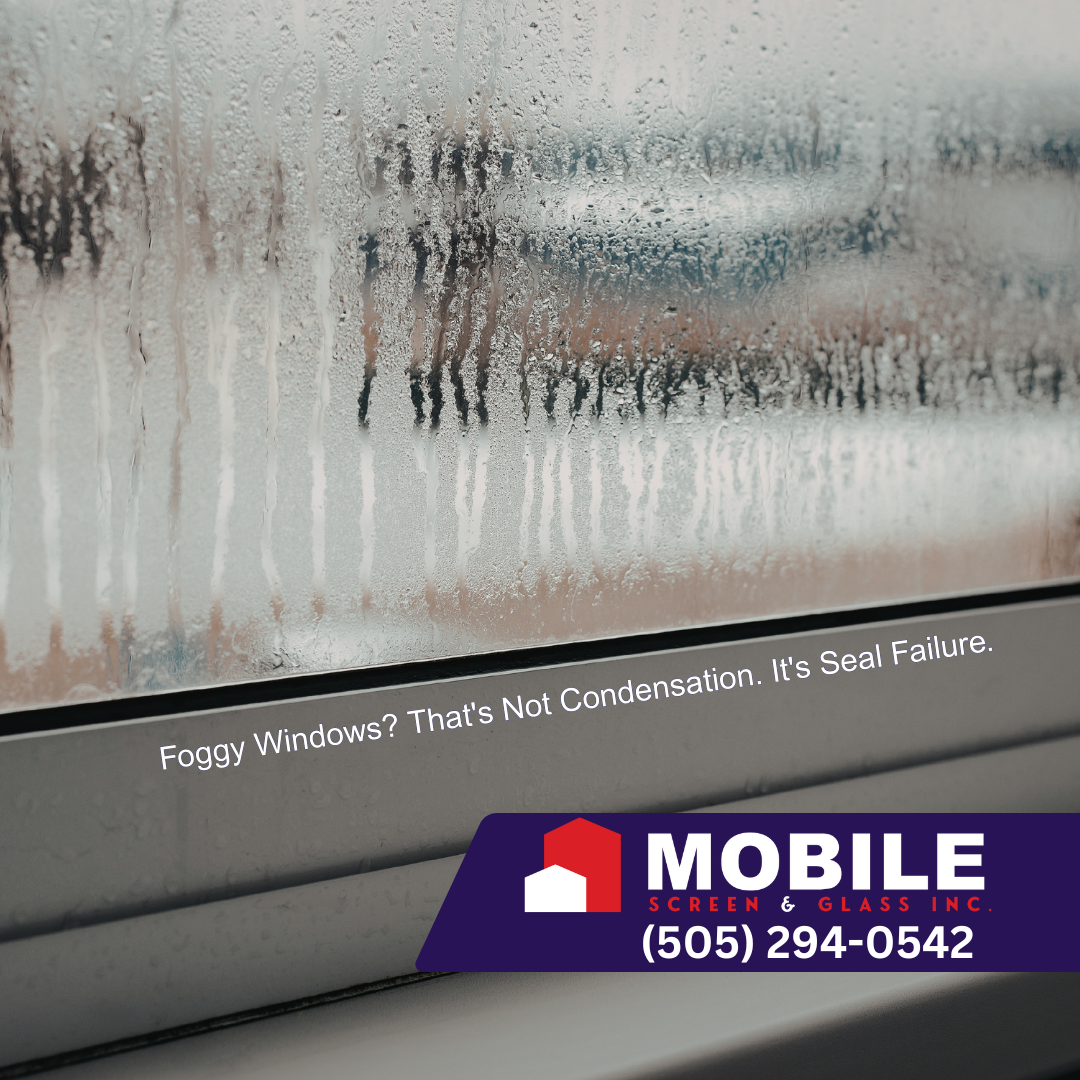
Foggy Windows? That's Not Condensation. It's Seal Failure.
You notice it on a cool morning. A haze between the panes of your bedroom window that wasn't there last year. You wipe the glass, inside and out, but the fog doesn't move. It's not on the surface. It's trapped between the layers, and no amount of cleaning will clear it.
That cloudiness isn't condensation from your morning coffee or a temperature difference between indoors and out. It's seal failure, and once it starts, it doesn't reverse on its own. The insulating gas that once kept your home comfortable has escaped, moisture has migrated into the gap, and the window is now working against you instead of for you.
If you're seeing foggy panes in your Albuquerque home, you're not alone. It's one of the most common service calls we get at Mobile Screen & Glass, especially in homes built during the 1980s and 1990s when double-pane windows became standard across the metro. Here's what's actually happening inside your windows, why it matters more than you might think, and what your repair options look like.

What's Happening Inside a Foggy Window
Double-pane windows (also called insulated glass units, or IGUs) work by trapping a layer of gas between two sheets of glass. In most residential windows, that gas is argon, which is denser than air and slows heat transfer. The two panes are held apart by a spacer bar around the perimeter, and the entire assembly is sealed to keep the gas in and moisture out.
When that perimeter seal fails, two things happen. The argon gas gradually leaks out and is replaced by regular air, which doesn't insulate as well. Then moisture from the outside air enters the gap. On cool mornings or during temperature swings (and in Albuquerque, we regularly see 40-degree differences between dawn and afternoon) that moisture condenses on the interior glass surfaces. The result is the foggy, cloudy appearance that no amount of exterior cleaning will fix.
Why Seals Fail in Albuquerque
Seal failure happens everywhere, but Albuquerque's climate accelerates it. There are three primary factors working against your window seals in this part of New Mexico.
UV exposure at altitude. At over 5,000 feet, Albuquerque receives significantly more ultraviolet radiation than cities at sea level. UV degrades the sealant compounds that bond the glass to the spacer bar. Over 15 to 25 years, even quality seals break down under this kind of sustained exposure.
Thermal cycling. Every day, your windows expand as temperatures climb and contract as they drop. Those daily expansion and contraction cycles, repeated thousands of times over the life of the window, stress the seal at the point where glass meets spacer. It's not dramatic. It's gradual. But eventually, the bond loosens and the seal lets go.
Wind pressure. Spring wind season in Albuquerque routinely delivers sustained winds above 30 mph with gusts into the 50 to 75 mph range. That kind of pressure flexes glass panes inward and outward, which pumps air across weakened seals and accelerates moisture intrusion. If your windows started showing fog after last March's wind events, the timing probably isn't a coincidence.
Why It Matters More Than Appearance
A foggy window feels like a cosmetic problem. It looks bad, but the window still opens and closes, so it's easy to put off. But seal failure has real consequences that go beyond aesthetics.
Energy efficiency drops measurably. Once the argon fill is gone, the window's insulating value decreases significantly. In a climate where you're running refrigerated air through June, July, August, and September, that lost insulation translates directly into higher utility bills. Multiply it across several failed windows and you're paying for comfort you're not getting.
Moisture damage can spread. In some cases, the moisture trapped between panes eventually affects the window frame itself, particularly in wood-framed windows where prolonged moisture contact leads to rot. Vinyl and aluminum frames are more resistant, but the surrounding wall materials can still be affected if the seal failure extends to the frame-to-wall junction.
It gets worse, not better. Seal failure is progressive. A window that's slightly hazy today will become increasingly opaque over the coming months. The moisture trapped inside also leaves mineral deposits on the interior glass surfaces, creating permanent staining that remains even if the moisture eventually dries. Early action gives you more repair options and better outcomes.
Your Repair Options
The good news is that foggy windows don't always mean replacing the entire window, frame and all. In many cases, the most cost-effective solution is replacing just the glass unit while keeping the existing frame. Here's how the options break down.
Glass-only replacement (IGU swap). If the window frame is structurally sound, with no warping, no rot, and hardware that still functions, our technicians can remove the failed insulated glass unit and install a new one directly into the existing frame. This is faster, less expensive than full window replacement, and handles the problem completely. It's the right call for most foggy window situations, and it's work we do every week across Albuquerque.
Full window replacement. If the frame itself is damaged, outdated, or if you're dealing with single-pane windows that were never double-pane to begin with, full replacement makes more sense. Modern low-E, double-pane windows perform dramatically better in Albuquerque's climate: better insulation, better UV blocking, better dust and noise reduction. If you're already addressing one window, it's worth having your technician assess the others at the same time.
The right option depends on the condition of the frame, the age of the window, and your goals. Our technicians assess all of this on-site during a free estimate and will recommend the approach that makes the most sense for your situation, not the most expensive one.
How to Know If Your Windows Have Seal Failure
Not sure if what you're seeing is seal failure or something else? Here are the telltale signs.
- Fog or haze between the panes that doesn't clear when you wipe either side of the glass.
- The cloudiness changes with temperature or time of day, worse in the morning and lighter in the afternoon.
- Water droplets visible between the panes, especially along the bottom edge.
- White mineral staining on the interior glass surfaces that remains even on dry days.
- A noticeable draft or temperature difference near the affected window compared to others in the room.
If you're seeing any of these, the seal has likely failed. The sooner it's addressed, the more options you'll have and the less secondary damage you'll risk.
Get a Free Assessment
At Mobile Screen & Glass, we've been repairing and replacing windows across Albuquerque for over 50 years. Our technicians carry the tools and experience to assess your foggy windows on-site, explain your options clearly, and in many cases complete the repair in a single visit.
Call us at (505) 294-0542 or fill out our free estimate form online. We'll schedule a truck to your home, take a look at what's going on, and give you a straight answer on the best way to fix it.