Same Day Service Available

Not All Windows Are Equal: How Sun Exposure Should Guide Your Replacement Window Choices
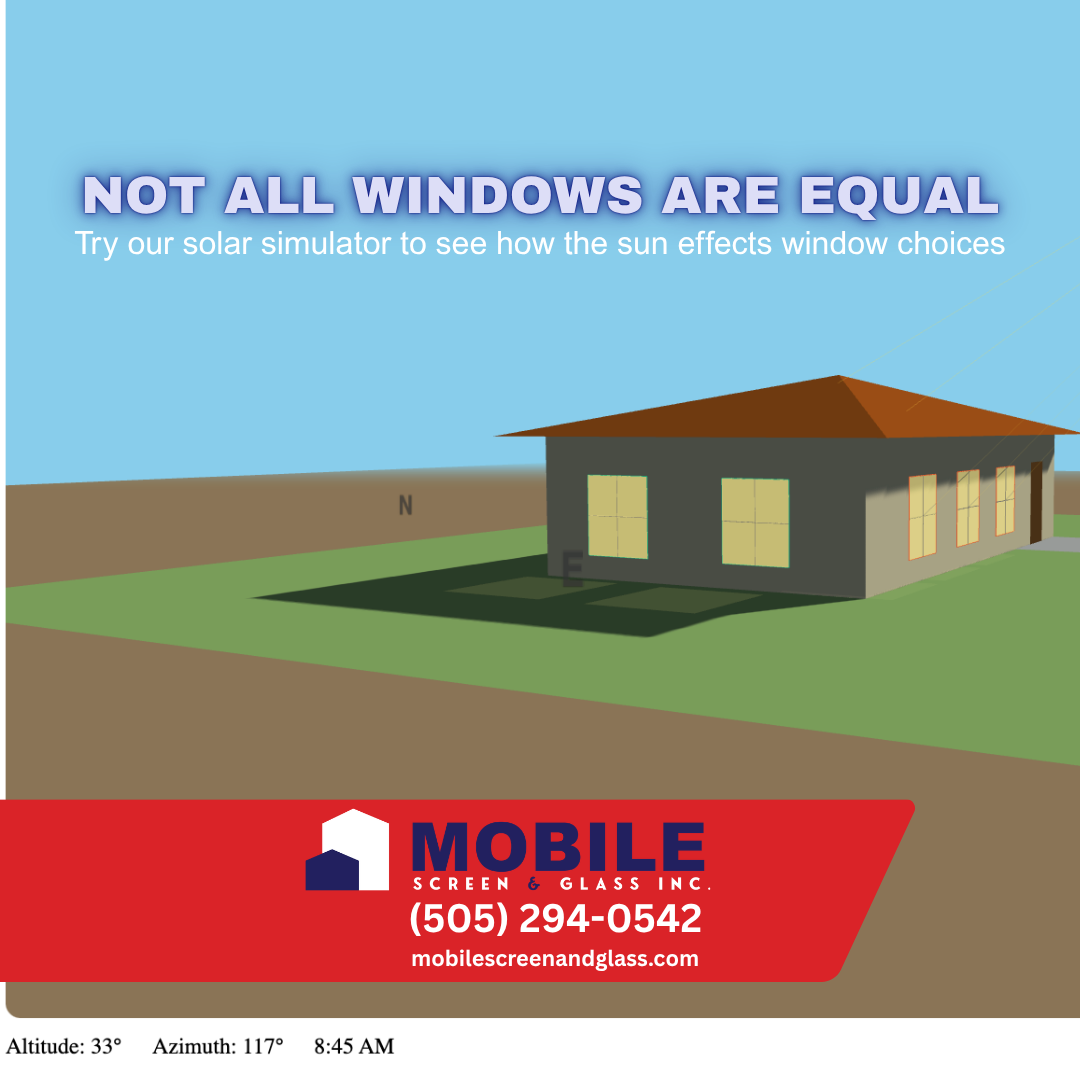
3:00 PM
How Sun Exposure Should Guide Your Replacement Window Choices in Albuquerque
If you are thinking about replacing windows, the conversation usually starts with which rooms need it most. That is the right starting point. But there is a second question most homeowners never think to ask: what kind of glass should go in each room? The answer depends on which direction the window faces, how the sun moves across your home throughout the day, and what you need that room to do. In Albuquerque, where we get over 300 days of sunshine and daily temperature swings of 30 degrees or more, the difference between the right glass and the wrong glass shows up in your comfort and your electric bill.
- South-facing windows take the most consistent sun exposure and benefit from Low-E glass paired with properly sized overhangs
- West-facing windows take the hardest thermal hit from low-angle afternoon sun and need the strongest solar heat control
- North-facing windows rarely see direct sun and should prioritize visible light transmittance over solar blocking
How the Sun Moves Across an Albuquerque Home
Albuquerque sits at 35 degrees north latitude. That means the sun takes a very different path across the sky depending on the season. In summer, the sun climbs to nearly 78 degrees at noon, almost directly overhead. In winter, it peaks at about 31 degrees, low enough to send light deep into any room with a south-facing window. Spring and fall sit in between at roughly 55 degrees.
That seasonal swing changes everything about how your home manages heat. A south-facing window that captures welcome warmth in January becomes a source of unwanted heat gain in July. A west-facing window that seems fine in the morning becomes the hottest surface in the house by 3 PM. Each side of your home has a fundamentally different relationship with the sun, and your glass choices should reflect that.
South-Facing Windows: The Longest Exposure
South-facing windows in Albuquerque receive direct sunlight for more hours than any other side of the house. In winter, the low sun angle is actually an advantage. Light enters at roughly 31 degrees, penetrating deep into the room and providing passive solar heat that reduces your heating load. A well-designed overhang blocks the high summer sun (78 degrees) while allowing the low winter sun to pass underneath.
For south-facing windows, the goal is glass with a low solar heat gain coefficient, typically 0.25 or below, paired with exterior overhangs sized to the local sun angles. This combination blocks summer heat while still allowing winter warmth and natural light. The visible transmittance should remain moderate to high so the room does not feel dark. Low-E coatings with spectrally selective properties accomplish this by reflecting infrared heat while letting visible light through.
West-Facing Windows: The Hardest Hit
West-facing windows take the most punishing thermal load in an Albuquerque home. Afternoon sun arrives at a low enough angle that roof overhangs provide almost no protection. The sun is below the overhang line and hitting the glass directly for three to four hours every afternoon during the hottest part of the day.
This is where you want the most aggressive solar control available. Look for glass with the lowest SHGC you can find, ideally 0.20 or below. Tinted Low-E glass can further reduce heat gain without making the room feel like a cave. Some homeowners add exterior shade solutions like awnings or solar screens to supplement the glass performance. If you are only going to upgrade the glass on one side of your house, west-facing windows deliver the biggest cooling cost reduction.
East-Facing Windows: Morning Warmth
East-facing windows receive morning sun, which is less intense than afternoon sun but still contributes meaningful heat gain during summer months. In Albuquerque, a kitchen with east-facing windows starts warming early and can be noticeably hotter than the rest of the house by mid-morning.
The recommendation for east-facing windows falls between south and west. A low SHGC around 0.25 works well for most rooms. If the east-facing room is a kitchen or breakfast area where you want morning light but not morning heat, spectrally selective Low-E glass strikes the right balance.
North-Facing Windows: Maximize the Light
North-facing windows in Albuquerque receive almost no direct sunlight. The light they get is indirect, diffuse, and consistent throughout the day. This makes north-facing rooms ideal for offices, studios, and any space where even, glare-free light matters.
Because there is minimal direct solar heat gain, north-facing windows can afford a higher SHGC, up to 0.40, and a higher visible transmittance rating. The goal shifts from blocking heat to maximizing natural daylight. Larger windows and higher VT glass can transform a dim north-facing room into the most comfortable workspace in the house without adding to your cooling load.
Room by Room, Side by Side
The best window replacement strategy treats your home as four distinct zones, one for each cardinal direction. When Mobile Screen and Glass provides an estimate, we consider the orientation of every window and recommend glass specifications matched to its exposure. This is not a one-size-fits-all approach. It is how you get a home where every room is comfortable and your HVAC system is not fighting the sun all day.
Whether you are replacing one window or planning a phased project across the house, we can help you choose the right glass for every side. Free estimates on any scope.